
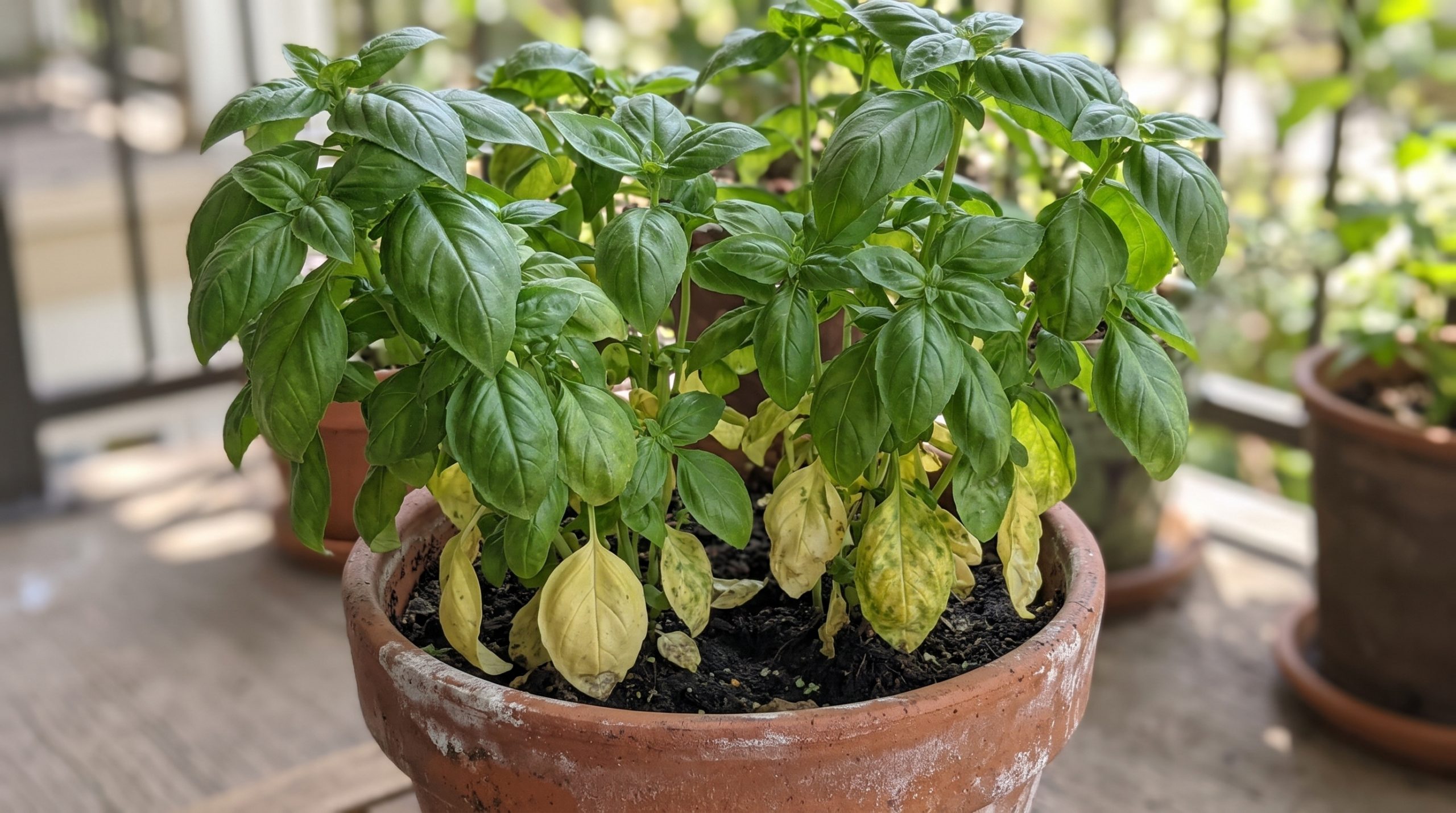
Basil Leaves Turning Yellow? 7 Causes and Fixes
Yellow basil leaves are one of the most common problems in small-space gardens, and the cause is usually easy to fix once you know what to look for. In this guide, you’ll learn the seven most likely reasons your basil leaves are turning yellow and exactly what to do about each one.
Quick diagnosis: what your yellow leaves are telling you
| What you see | Most likely cause |
|---|---|
| Lower leaves yellow, soil soggy, plant droopy | Overwatering or poor drainage |
| Yellow, dry, crispy leaves, soil bone dry | Underwatering |
| Pale, leggy plant, yellowing and slow growth | Not enough light |
| Older leaves yellow evenly, slow growth | Nutrient deficiency |
| Yellow or blackened leaves after a cold night | Cold stress |
| Yellow spots, tiny insects, webbing or grey fuzz under leaves | Pests or disease |
| A few old lower leaves yellow, flower buds forming | Natural aging or bolting |
1. Overwatering or poor drainage
This is the most common cause. Basil likes moist soil, but not soggy soil. When roots sit in water, they can’t get oxygen, and the plant starts yellowing from the bottom up.
How to fix it:
- Let the top inch of soil dry out before watering again. Poke a finger in to check.
- Make sure your pot has drainage holes, and never leave it sitting in a saucer of water.
- If the soil stays wet for days, repot into fresh, well-draining potting mix.
2. Underwatering
If the soil dries out completely, basil leaves turn yellow, then dry and crispy, and the plant wilts.
How to fix it:
- Water deeply until water runs out of the drainage holes, then let the top inch dry again.
- In hot weather, small pots dry out fast. A larger pot holds moisture longer.
- Check the soil rather than following a fixed schedule.
3. Not enough light
Basil is a sun-loving herb that needs about six to eight hours of direct sunlight a day. In low light, it grows tall and thin, and the leaves turn pale yellow.
How to fix it:
- Move the pot to your sunniest spot, such as a south-facing window or an open balcony.
- Indoors without much sun, use a grow light for 10 to 12 hours a day.
4. Nutrient deficiency (especially nitrogen)
Potted basil uses up the nutrients in its soil quickly. When nitrogen runs low, older leaves turn an even pale yellow while the plant stops growing.
How to fix it:
- Feed with a balanced liquid fertilizer at half strength every two to four weeks during the growing season.
- Don’t overfeed. Too much fertilizer can burn the roots.
5. Cold temperatures
Basil is a warm-weather plant and doesn’t tolerate cold well. Temperatures below about 50°F (10°C) can turn leaves yellow or black, and cold drafts from windows or air conditioners cause problems too.
How to fix it:
- Keep basil in a spot that stays warm, ideally above 65°F (18°C).
- Bring pots indoors when nights turn cool, and keep them away from cold glass and drafts.
6. Pests and disease
Several problems cause yellow leaves along with other clear signs:
- Aphids and whiteflies: tiny insects on the undersides of leaves, often with sticky residue.
- Spider mites: fine webbing and yellow speckles on leaves.
- Downy mildew: yellow patches between leaf veins, with grey or purple fuzz underneath.
How to fix it:
- Isolate affected plants and spray pests off with water, then use insecticidal soap if needed.
- Remove leaves with mildew, avoid wetting the foliage, and give plants good airflow.
- If a plant is badly infected, it’s usually best to discard it and start fresh with new soil.
7. Natural aging or flowering (bolting)
It’s normal for a few older, lower leaves to yellow as the plant grows. Basil that starts to flower puts its energy into seeds, and leaf quality drops.
How to fix it:
- Remove yellow leaves and harvest regularly by pinching stems just above a pair of leaves.
- Pinch off flower buds as soon as you see them to keep the plant leafy.
How to save a yellowing basil plant: quick checklist
- Check the soil moisture (too wet or too dry?).
- Check the pot’s drainage.
- Check the light and temperature.
- Look under the leaves for pests or fuzz.
- Remove damaged leaves and feed lightly.
Frequently asked questions
Will yellow basil leaves turn green again?
No. Once a leaf has turned yellow, it won’t recover. Remove it so the plant can put its energy into new growth, and focus on fixing the cause.
Can I eat basil with yellow leaves?
Leaves that are mildly yellow from age or low nutrients are generally safe, but they may taste weaker. Don’t eat leaves with mold, pests or a slimy texture.
How often should I water basil?
It depends on pot size, weather and light, so check the soil instead of following a schedule. Water when the top inch feels dry.
Why are the bottom leaves of my basil turning yellow?
This is most often overwatering, but it can also be a nutrient shortage or normal aging. Check the soil moisture first.
Final thoughts
Most yellow basil problems come down to water, light or nutrients. Work through the checklist above, change one thing at a time, and new growth should come in healthy within a week or two. If you grow herbs in tight spaces, you may also like our guide to Herbs & Vegetables